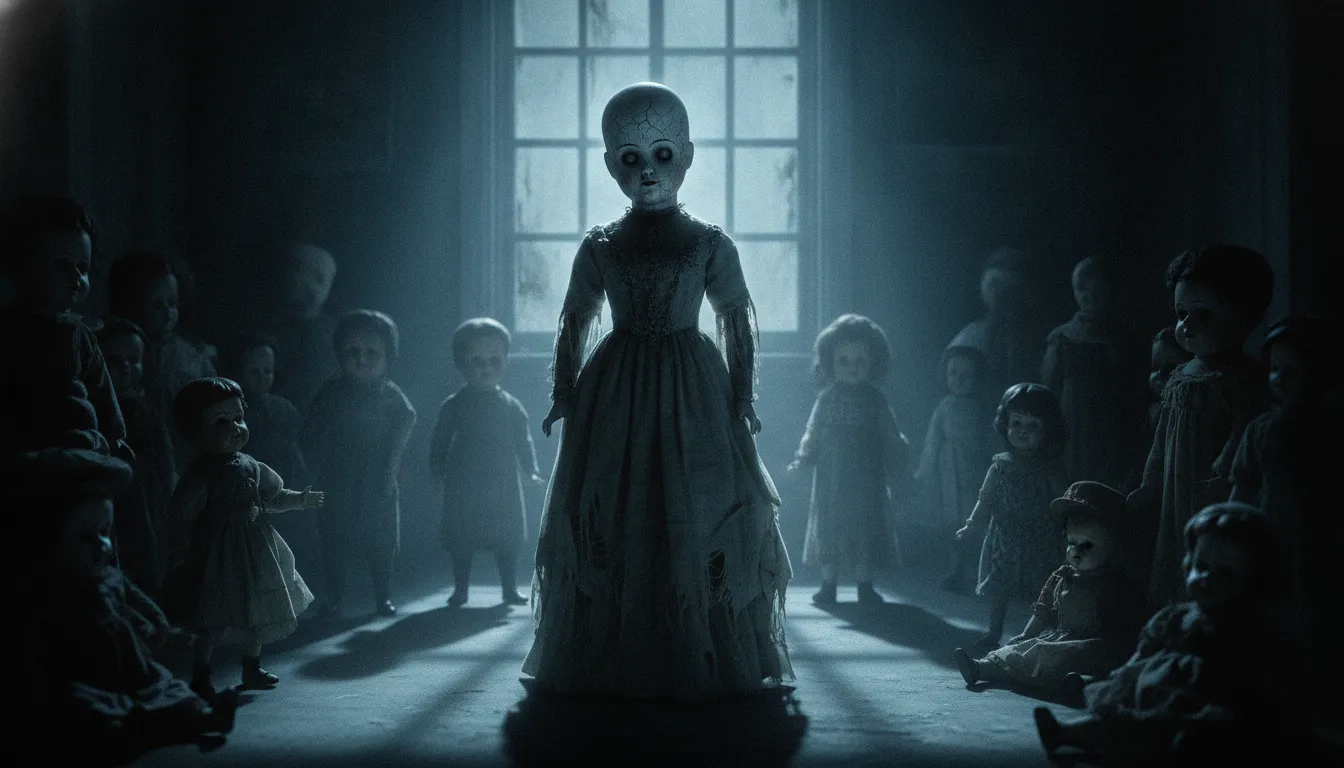
Cold, empty eyes. A blank expression. Something that can be made and molded entirely to somebody’s preference. Dolls are open shells for us to lay ideas into, whether that means innocence, nostalgia, terror, or, if you believe it, a spirit itself.
They have been part of human life for an incredibly long time, from some of the earliest objects associated with childhood to the absolute cultural titan that is Barbie. Yet dolls also occupy a bizarrely specific place in horror. A doll can sit completely still, do absolutely nothing, and still make a person want to leave the room. That is kind of iconic.
The haunted doll is now one of horror’s most familiar creatures. Annabelle, Robert the Doll, Chucky, Talking Tina, Okiku, and a frankly wild amount of dolls listed online as possessed or cursed have all become part of the collective haunted-object canon. But the story did not begin with a killer toy or a Hollywood demon. It begins with spiritual practices, cultural objects, and the very old human instinct to see a face and wonder what might be looking back.
Before Haunted Dolls, There Were Spirit Figures
The idea that a crafted figure could embody, represent, or connect with a spirit is ancient. Crucially, that does not mean every spiritual figure was considered evil, malicious, or a vessel for a demon. Quite the opposite. In many cultures, figures that outsiders might flatten into the category of “dolls” have been used for ceremony, education, protection, memory, and connection to the spiritual world.
That distinction matters. A sacred object is not automatically a toy, and spiritual work is not automatically witchcraft or harmful magic. A huge part of the modern haunted-doll myth comes from Western culture taking unfamiliar practices, refusing to understand them, and deciding they must be evil. Shocking behavior, really.
Katsina Dolls and Hopi Religious Tradition
In Hopi culture, hand-carved and painted wooden Katsina figures represent spirit beings. They are connected to ceremonies and serve as meaningful cultural and religious teaching tools. Individual figures may carry staffs, spears, or other identifying features connected to the spirit they represent.
They can be given to children during ceremonies, but they are not simply toys. Their role is to help teach children about Katsinam and the values, stories, and ceremonial life of their community. This is one early and important example of a human-shaped crafted object holding spiritual meaning without being framed as sinister.
Nkisi Figures in Central African Spiritual Practice
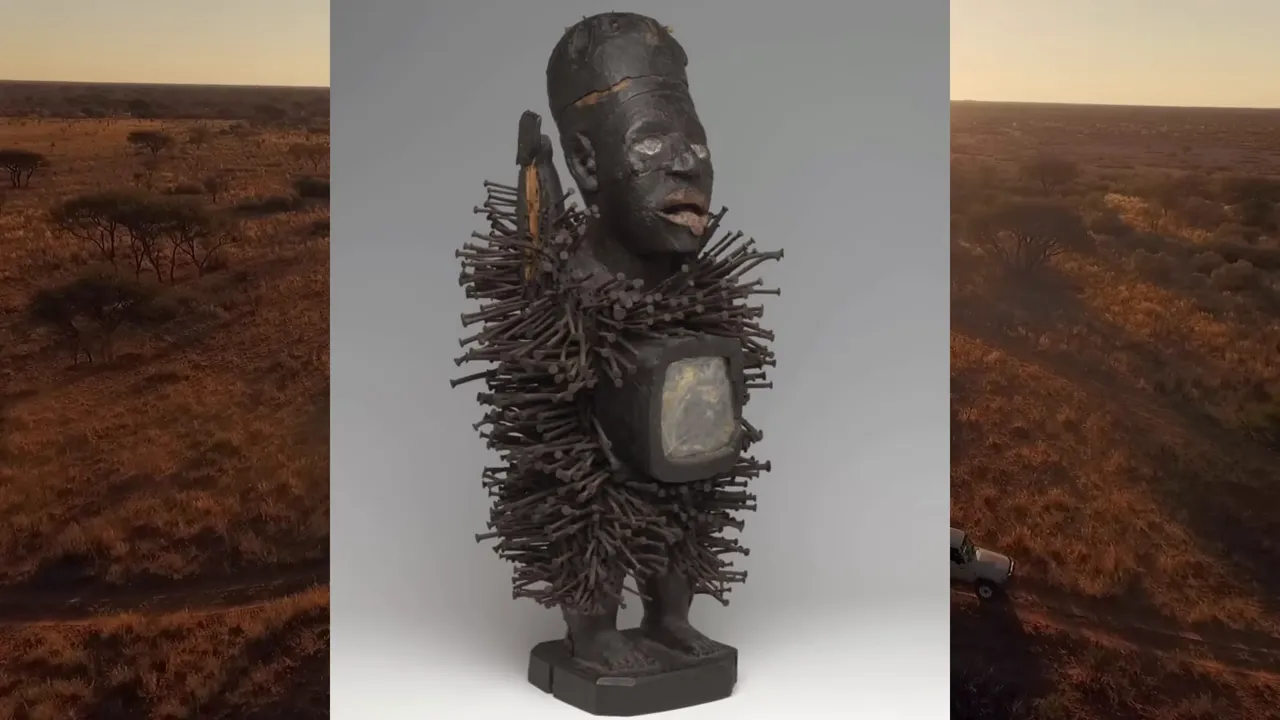
Across Central Africa, particularly within Kongo religious traditions, nkisi are containers for spiritually charged substances or spiritual forces. These objects can take many forms, including humanoid figures, carved faces, ceramics, animal horns, or other materials. They are not one fixed thing, because their purpose is rooted in what they hold and how they are used.
Some nkisi figures are associated with protection, public oaths, healing, justice, or defense against harm. Certain figures, often called nkondi, are recognizable for the nails, blades, or other objects driven into them. That imagery is so visually intense that people understandably go, “Well, that seems cursed.” But the inserted objects can function as petitions, promises, agreements, or calls for spiritual assistance.
These traditions survived the Atlantic slave trade despite unimaginable violence and displacement. In the Americas, African spiritual practices were frequently misunderstood, demonized, and deliberately misrepresented by white European and American observers. That history is inseparable from the later myth of the so-called “voodoo doll.”
The Voodoo Doll Myth
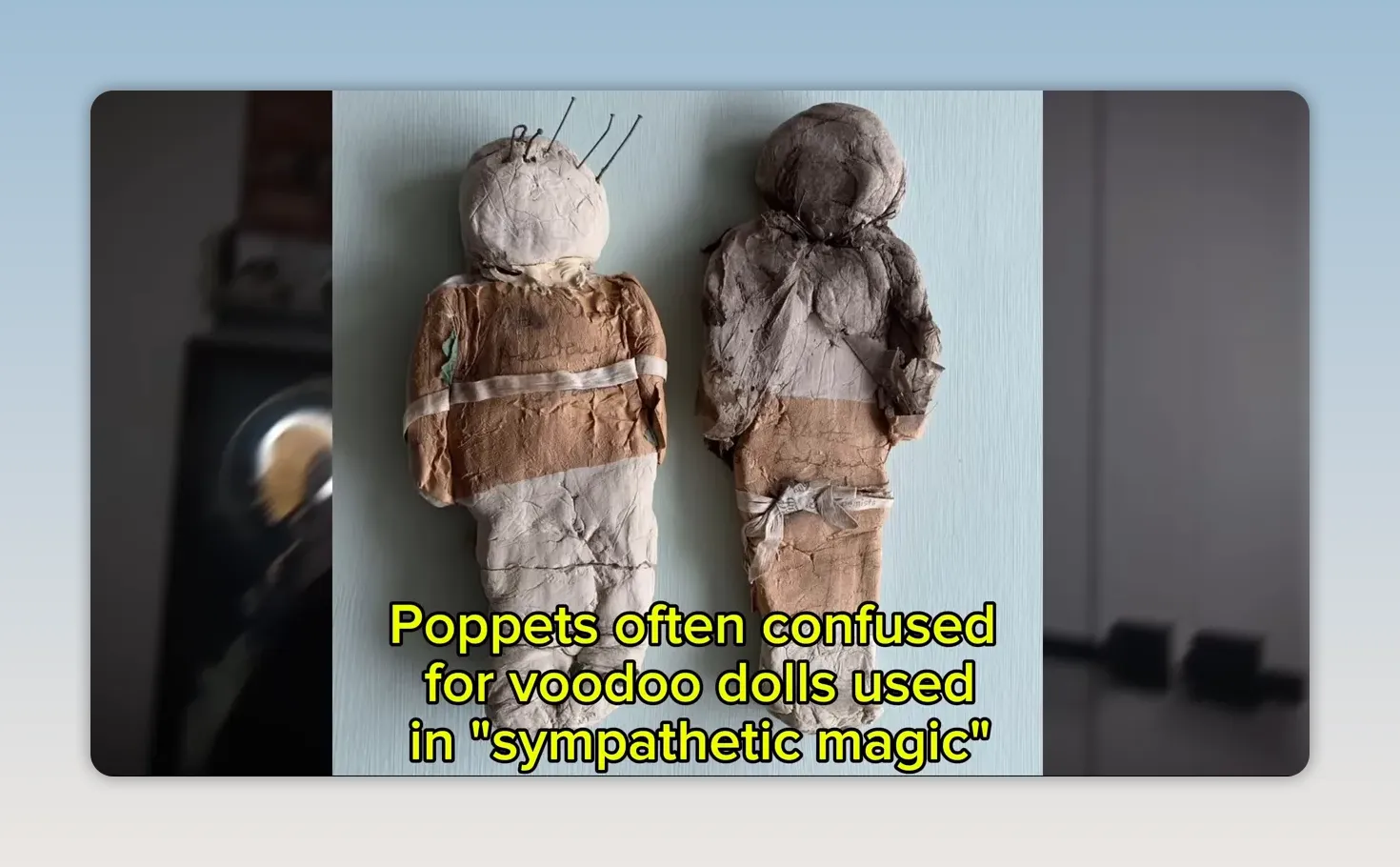
The pop-culture image is instantly recognizable: a small human-shaped doll, pins pushed into it, and a victim somewhere else suffering the same pain. It is a staple of horror, cartoons, and cheap Halloween décor. But that image is largely a Western construction, amplified through Hollywood portrayals of “black magic.”
The pin-pricked effigy is not a central or typical practice in Haitian Vodou or Louisiana Voodoo, and many practitioners have rejected the stereotype outright. When dolls or figures are used in folk or spiritual contexts, they may be made to represent the practitioner, offer protection, focus prayer, or hold personal meaning. The leap from “spiritual object” to “evil curse doll” says much more about cultural prejudice and sensationalism than it does about the traditions being stereotyped.
So when did dolls become evil in the way we now mean it? When did they go from ceremonial figures and childhood companions to tiny murder machines? Horror fiction got there first.
How Horror Turned Dolls Into Monsters
Before the eighteenth century, most dolls were fairly rudimentary. But craftsmanship and technology evolved. Dolls became more realistic, more elaborate, more mechanically sophisticated, and more capable of imitating people. That was the exact moment writers and filmmakers went, “Okay, but what if it was evil?”
The Sandman and the Fear of Artificial Life
One of the earliest major entries in the creepy-doll lineage is E. T. A. Hoffmann’s 1816 story The Sandman. Its central character, Nathanael, becomes infatuated with Olimpia, a beautiful young woman who is eventually revealed to be an elaborate mechanical doll. The story combines trauma, obsession, artificial life, and the horrifying realization that someone he believed was human was not.
That is the haunted-doll formula in embryo: a humanlike object that is close enough to fool us, but not close enough to feel right.
From Devil Doll to Talking Tina
Dolls and miniature humans entered film horror early. Tod Browning’s The Devil-Doll, released in 1936, follows a man seeking revenge after being falsely accused of crimes. With the help of a scientist who has discovered how to shrink people, he turns human beings into doll-sized victims. It is strange, melodramatic, and very much of its era, but it helped establish dolls and miniaturization as an unsettling horror concept.
Then came The Twilight Zone episode “Living Doll,” featuring Talking Tina. The episode riffs on the popular Chatty Cathy doll, but turns the chatty child’s toy into something genuinely threatening. A mother gives the doll to her daughter, while the child’s cruel stepfather becomes convinced it is evil. He tries everything to destroy it, including cutting it apart and burning it, yet the doll persists.
The brilliance of Talking Tina is the uncertainty. Is the stepfather paranoid? Is he projecting his own rage and guilt onto a harmless toy? Or is the doll actually out to get him? Eventually, it becomes apparent that yes, she is evil. Classic Twilight Zone. The nasty little doll was right all along.
Chucky Changed the Blueprint
Child’s Play in 1988 fully changed the trajectory of homicidal doll horror. Chucky was not the first evil doll, but he gave the genre a more vivid, modern blueprint. He could walk, talk, change expressions, swear, crack jokes, and, most importantly, kill people with the confidence of a tiny serial killer in overalls.
The technical achievement mattered. Chucky felt physically active in a way earlier doll villains often did not. That made the threat immediate. You could not just place him on a shelf and close the door. He was going to get off the shelf, grab a knife, and make it everyone’s problem.
The success of Child’s Play inspired a wave of doll and puppet horror, including the gloriously trashy Puppet Master series. Dolls became so common in 1980s horror that the trope later got dismissed as tacky or camp. Which, yes, sometimes it absolutely is. That does not mean it stopped being effective.
Why Dolls Are So Scary in the First Place
Dolls are perfect horror objects because they are blank slates. Their faces are designed to suggest human emotion without actually having any. We are wired to recognize faces, read expressions, and use those expressions to assess intent, mood, and danger. A face is information.
But a doll gives us only a frozen imitation of that information. We see eyes, lips, cheeks, maybe a smile. Yet there is no living person there for our brain to read. That gap produces the tension.
The Uncanny Valley
This discomfort is connected to the uncanny valley, the feeling of unease that can arise when something looks almost human but not quite human enough. Dolls, mannequins, puppets, masks, animatronics, and highly realistic humanoid robots all exist somewhere in that unnerving zone.
The eyes may be too still. The face may not move naturally. The proportions may be slightly wrong. The smile may never change. A doll is recognizably human-shaped, but it is unmistakably not a person. The brain clocks that contradiction and starts ringing little alarm bells.
The fear of dolls is called pediophobia. It falls under the broader fear of humanlike figures, commonly known as automatonophobia. That larger category can include mannequins, wax figures, puppets, robots, and other objects that mimic human form.

Some people may have an innate sensitivity to this human-but-not-human feeling. Others learn fear through experience, horror media, or family behavior. If a parent has always hated clowns or dolls, that fear can become part of a child’s idea of what is dangerous. There is also research suggesting that certain fear responses may have inherited components. So if generations of your family have been terrified of porcelain dolls, unfortunately, you may have been spiritually and genetically set up.
Annabelle: The Most Famous Haunted Doll of the Modern Era
Annabelle might be the most famous haunted doll in modern popular culture, especially after The Conjuring universe turned her into a full franchise. The movie version is a terrifying porcelain doll. The real Annabelle is a Raggedy Ann doll, which is almost somehow more unsettling because she looks like she should be sitting in a nursery, not allegedly searching for a human soul.
According to the story associated with paranormal investigators Ed and Lorraine Warren, Annabelle was gifted to a nursing student in 1970. Strange things reportedly began happening around the doll. It was said to move around the apartment, change positions, and become connected to missing objects and unsettling incidents.
A psychic medium allegedly told the student and her roommate that the doll contained the spirit of a deceased young girl named Annabelle. The women accepted the story and cared for the doll. The activity reportedly became increasingly hostile, leading the Warrens to conclude that the presence was not a child spirit at all, but a demonic entity seeking a human host.
The Warrens took the doll to their museum, where it remains associated with warnings not to provoke it. Whether you see that as paranormal history, a carefully built legend, or very efficient horror marketing, Annabelle’s cultural impact is undeniable.
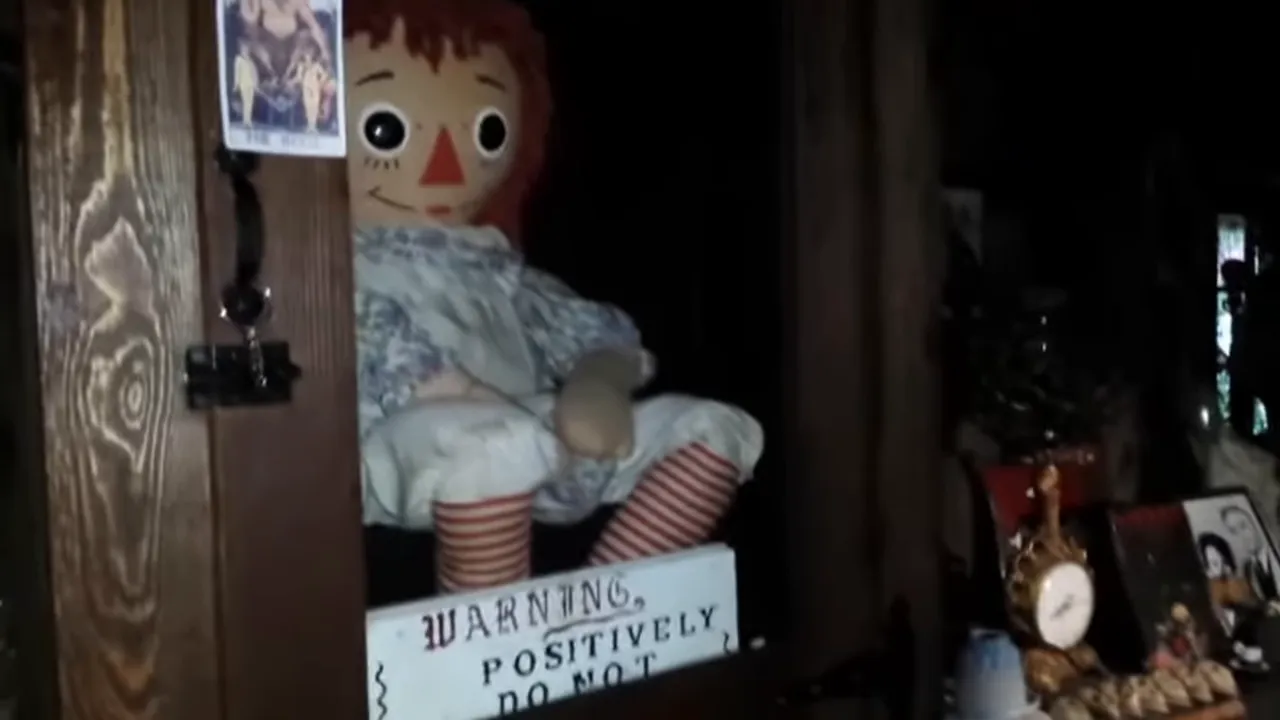
And yes, the Annabelle films have made an enormous amount of money. The doll is allegedly demonically possessed and also apparently very good for Blumhouse’s bottom line.
Robert the Doll: A Florida Legend With Rules
Before Annabelle became a modern horror celebrity, there was Robert the Doll. He is now housed at the Fort East Martello Museum in Key West, Florida, where he has developed a reputation as one of the most dangerous haunted dolls in America.
Robert belonged to artist Robert Eugene Otto, who received the doll as a child. The most grounded version of the story is that Otto’s grandfather bought the doll during a trip to Germany in 1904 and gave it to him as a birthday gift. Otto named the doll Robert after himself.
Over the years, the doll’s history became buried beneath urban legend. Some versions claim that an African-descended servant gave Robert to the family as an act of revenge or placed a curse on it. These stories are unsubstantiated and often rely on the same racist “voodoo doll” mythology that gets lazily pasted onto any strange object with a Black servant somewhere in its backstory. There is no reason to treat that version as fact.
The legend that remains is that Robert was playfully malicious. He was blamed for strange household occurrences, shifting expressions, and frightening incidents. Otto allegedly blamed the doll for misbehavior as a child, and his wife later reported that unusual things happened around it. Maybe Robert was haunted. Maybe Robert Otto was just a wonderfully odd man with a very intense attachment to his doll. Both possibilities are compelling.
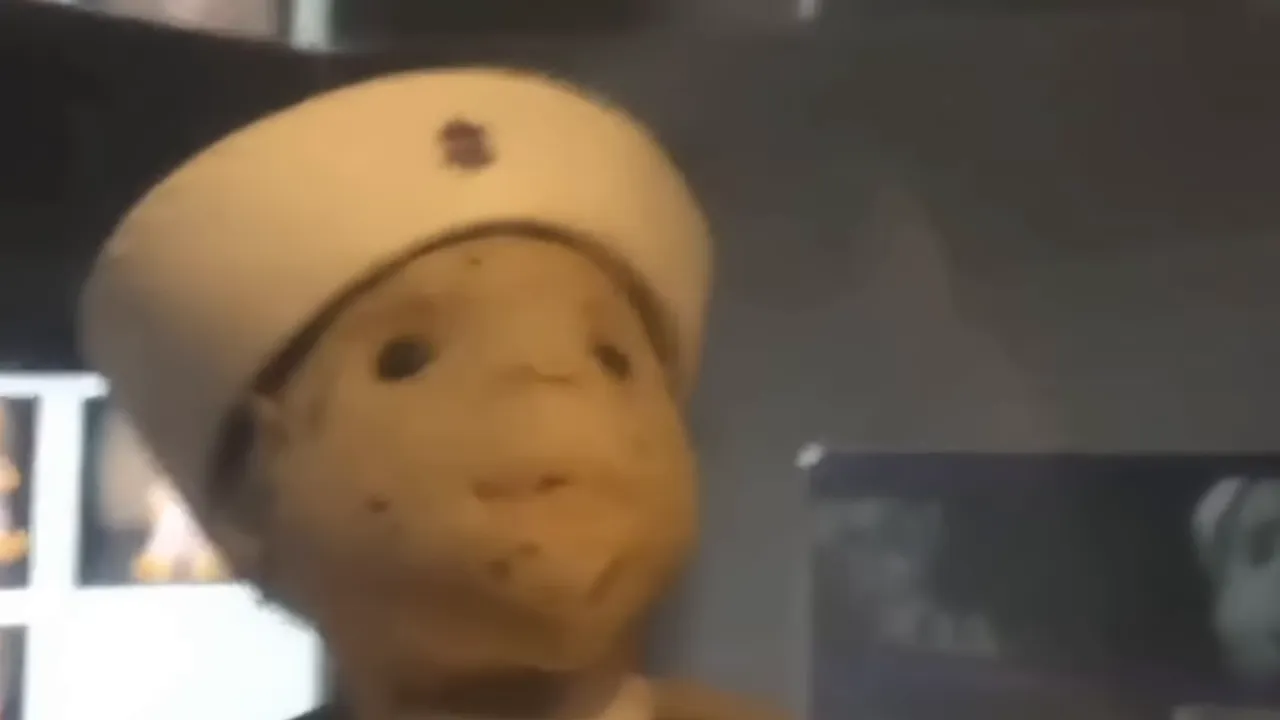
Robert’s current legend has rules. Visitors are said to need his permission before taking a photograph. Disrespect him, mock him, or snap a picture without asking, and the story goes that you may suffer misfortune: accidents, job losses, relationship problems, nightmares, or worse. People even send letters apologizing to Robert after bad things happen.
I am not telling anyone what to believe. I am merely saying that if I am standing in front of a supposedly cursed doll, I will be polite. There is no need to take chances with a doll in a sailor suit.
Okiku: The Doll Whose Hair Keeps Growing
My personal favorite haunted doll is Okiku, a Japanese doll with a story that is equal parts sad, eerie, and honestly kind of darling.
In 1918, a boy reportedly bought the doll at an exhibition in Sapporo for his younger sister, Okiku. The little girl loved it deeply. Not long after, she died from a cold at around three years old. Her family placed the doll on their home altar in remembrance of her.
Then they noticed something strange. The doll originally had a short bob haircut, but its hair was said to begin growing. The family interpreted this as a sign that Okiku’s spirit had entered the doll because she loved it so much.
The doll stayed with the family for around two decades before being given to Mannenji Temple in 1938. The temple has reportedly maintained the doll ever since, and the story holds that its hair has continued to grow. Temple caretakers have allegedly trimmed it over the years, with some accounts claiming that the hair has reached considerable length and may be genuine human hair.
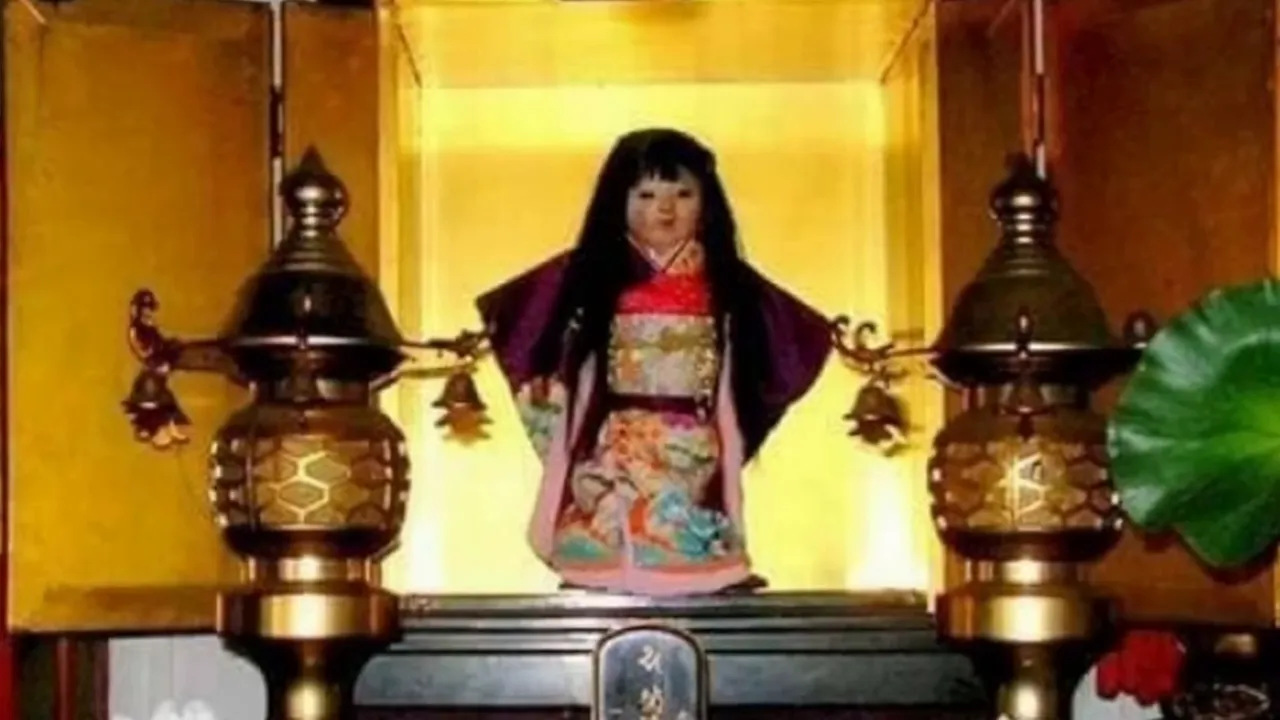
As with most haunted-doll stories, there is plenty of variation. Claims about hair testing and the doll’s exact history are debated. But the image itself is powerful: a little doll loved by a child, placed on an altar after her death, then slowly changing. It does not need to be violent to be haunting.
Letta Me Out: Australia’s Extremely Unsettling Little Guy
Then there is Letta Me Out, or simply Letta, an Australian doll whose name genuinely sounds like a drag queen entering the stage. The doll was reportedly found beneath a haunted house decades ago, despite being estimated at around 200 years old.
Letta is carved from wood, has large cheeks, a prominent nose, and human hair. And to be fair, using human hair in dolls and masks was not nearly as shocking centuries ago as it feels now. People used materials that were available. Still, knowing that does not make the doll look less alarming.
People who claim to have encountered Letta report nightmares, bad energy, uncomfortable sensations, and strange activity. Its owner has said that he believes the doll walks around at night. Dogs are also said to react aggressively to it.
Could it all be folklore growing around an odd antique? Of course. But if we are ranking haunted dolls based entirely on vibes, Letta has an aggressively haunted vibe. I would not be taking that one home.
The Haunted Doll Marketplace Is Very Real
Haunted dolls are no longer just museum curiosities or stories passed around online. There is a full market for them. Search “haunted doll” on Etsy, eBay, TikTok, or any platform where people sell strange things, and you will be overwhelmed almost immediately.
Listings may describe a doll’s supposed spirit, personality, age, death story, preferences, paranormal abilities, and temperament. Some are described as sweet, protective, or lonely. Others are explicitly marketed as malicious, aggressive, or dangerous. There are accounts devoted to showing alleged EVPs, objects moving near dolls, and evidence of a spirit’s presence.
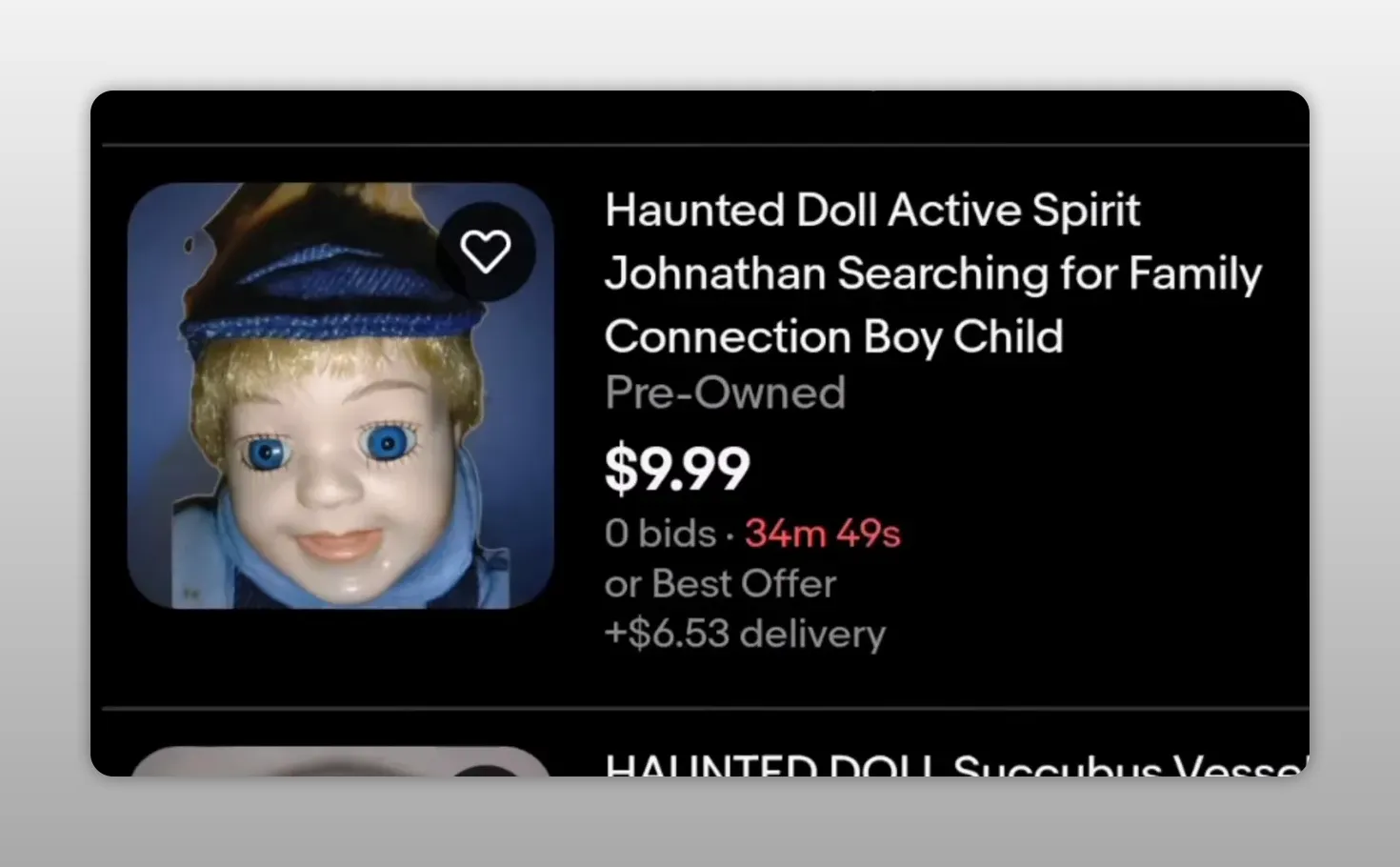
There is something kind of fascinating about the way this market blends folklore, collecting, spirituality, performance, commerce, and horror aesthetics. Every listing is a tiny ghost story with a price tag. I am not saying everyone is lying. I am simply saying that not every doll listed as a 200-year-old malicious drowning victim is probably haunted. Personally, I am open to ghosts being real, but I would need something more significant than an Etsy description before I start rearranging the guest room for Susan the Victorian child spirit.
Why Haunted Dolls Will Never Go Away
Haunted dolls are hard to pin down because they exist in a strange overlap of history, religious misunderstanding, urban legend, childhood memory, horror fiction, and personal belief. They are objects people can project anything onto. A doll can be sweet, sacred, creepy, comforting, ugly, glamorous, threatening, or all of those things at once.
They also carry an unavoidable emotional charge. Dolls are linked to childhood, care, imagination, and memory. When horror twists that association, it creates an immediate contradiction. Something designed to comfort becomes something that threatens. Something that looks like a child becomes something with adult intent. Something with a face refuses to tell us what it feels.
That uncertainty is horror’s best friend.
Maybe haunted dolls are vessels for spirits. Maybe they are just old objects carrying the stories people attach to them. Maybe most of them are not haunted at all, but they still manage to activate a very old part of the brain that says, “That thing looks like me, but it is not me, and I do not trust it.”
Either way, dolls have lasted through centuries of cultural change because they are never really empty. We fill them with fear, love, memory, folklore, and whatever the hell is going on in the darkness at the end of the hallway.
Just ask Robert before taking the photo. For everyone’s sake.
For more background on the cultural history of unsettling dolls, this history of creepy dolls offers useful additional context, while the Robert the Doll museum site documents the Key West legend from the institution that houses him.