
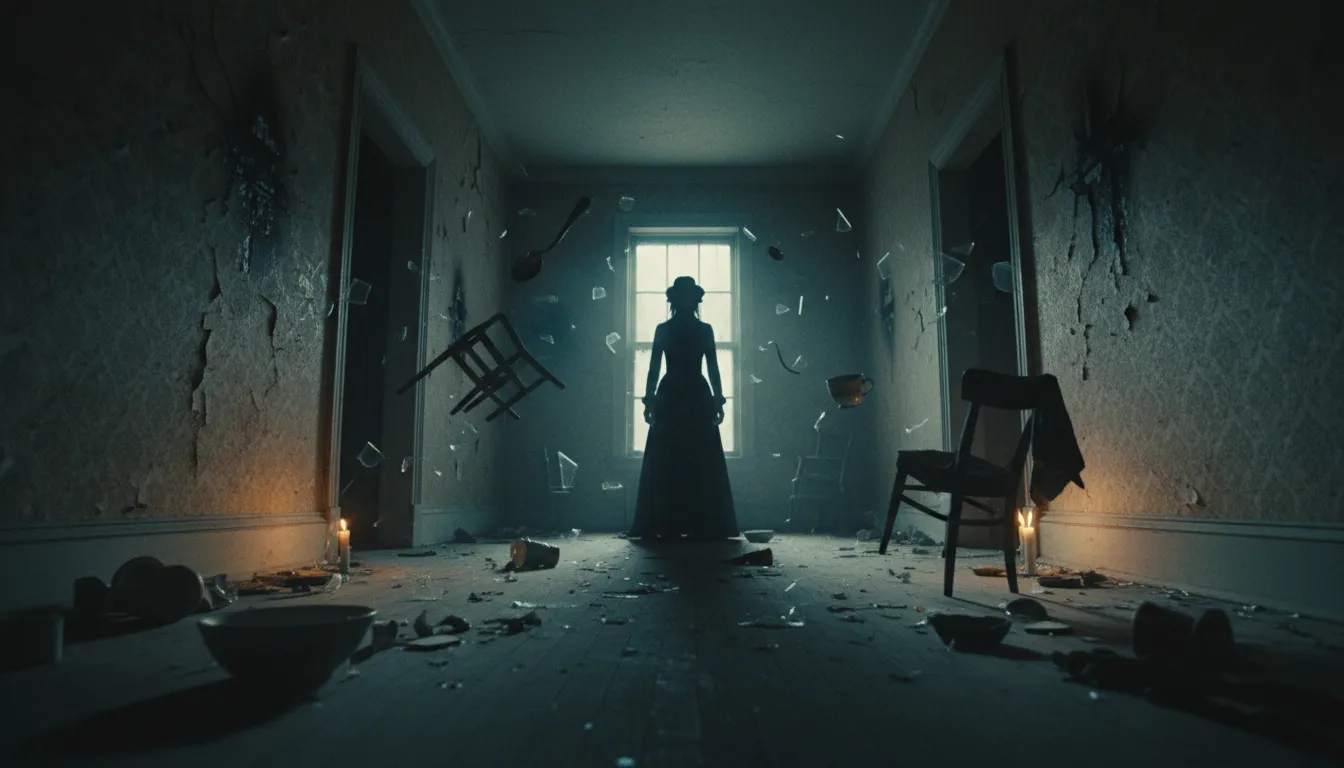
Nova Scotia has a way of lending itself to stories like this.
Its coastlines are beautiful, its towns historic, and its older homes seem to hold onto atmosphere in a way that feels almost unfair. But among all the ghost stories and folklore tied to Canada’s east coast, one case rises above the rest for sheer violence, strangeness, and the uncomfortable possibility that whatever happened may have been far more human than supernatural.
This is the story of Esther Cox, the young woman at the center of what became known as The Great Amherst Mystery.
Beginning in 1878 in Amherst, Nova Scotia, Esther’s life was consumed by pounding knocks, flying objects, unexplained fires, threats scratched into walls, and attacks so brutal that witnesses feared she would be killed. Doctors saw things they could not explain. Neighbors crowded outside her home. Newspapers sensationalized the story. An actor and investigator named Walter Hubble arrived intending to expose a fraud, only to leave convinced something extraordinary had taken place.
And yet, for all its famous paranormal elements, this case carries another shadow over it. Just before the disturbances began, Esther had endured a deeply traumatic experience. Once that detail enters the picture, the haunting becomes something else entirely. Still frightening, yes. But also deeply sad.
Whether this was a true poltergeist case, a psychological crisis made mythic by publicity, or something in between, the Esther Cox haunting remains one of the darkest and most debated paranormal stories ever recorded.
Table of Contents
- Amherst, 1878: The Household Where It Began
- Something in the Dark
- The Swelling Attacks and the First Violent Manifestations
- The Doctor Arrives
- The “Electrical” Theory
- When the House Became a Public Spectacle
- Fire Enters the Story
- The Ghost Gets a Name and a Personality
- Exile from Home
- Walter Hubble and the Failed Debunking
- The Summer of Daily Violence
- The Family Breaks Apart
- A Fiery End and a Prison Sentence
- The Missing Piece: Bob McNeil and the Trauma at the Center of It All
- Was Esther Cox Haunted, Traumatized, or Both?
- The Problem With Sources
- Why the Esther Cox Case Still Endures
- FAQ
- Final Thoughts
Amherst, 1878: The Household Where It Began
In late summer of 1878, Esther Cox was living in a two-story home on Princess Street in Amherst. The house itself was busy and crowded, which matters, because the number of witnesses in this case became one of the main reasons it refused to fade away.
Esther lived with her sister Jenny, her brother William, her older sister Olive, Olive’s husband Daniel Teed, their children, and Daniel’s brother John. It was a working household. Daniel was employed at the local shoe factory. Jenny worked too. Esther mostly helped maintain the home and tended the animals.
By all accounts, she was not known as a troublemaker. She was 18 years old, ordinary, sociable, and not someone the town viewed with suspicion.
She was also seeing a man named Bob McNeil, who had a poor reputation. Esther’s sisters disliked the relationship, but she continued seeing him anyway.

Then, one rainy evening near the end of August, she came home soaked through after being out in a carriage with Bob. He was nowhere to be seen. Esther went straight upstairs, shut herself away, and barely spoke for days.
That silence would turn out to be one of the most important details in the entire case.
Something in the Dark
For about a week, Esther withdrew from everyone. Jenny, who normally shared a bed with her, gave her space and slept elsewhere for several nights. She could hear Esther crying at night, but assumed she wanted to be left alone.
Then, on the night of September 4, 1878, the strange events began.
Jenny returned to their room and climbed into bed. Just before drifting off, Esther asked her what day it was. It was one of the first things she had said in days. Jenny answered and told her to go to sleep.
Ten minutes later, Esther suddenly screamed and leapt up, convinced something was in the bed.
The sisters looked, expecting perhaps a mouse, but found nothing. The next night the same thing happened again. This time, thinking the noise might be coming from a box beneath the bed, Jenny dragged it into the center of the room.
Then the box jumped.
Not tipped. Not shifted. Jumped into the air, about a foot off the floor, and crashed back down.
Jenny set it upright again. It jumped a second time.
The girls screamed for help. Daniel Teed came in, heard their story, and dismissed it as foolishness. But by morning, both girls were still insisting they had seen what they had seen.
This was only the beginning.
The Swelling Attacks and the First Violent Manifestations
A few nights later, things became much more alarming.
Esther went to bed feeling feverish. Later that night, she sprang from bed in terror, insisting she was dying. When Jenny lit the lamp, Esther looked horrifying. Her face was flushed red, her eyes bulging, and she clutched a chair so tightly her nails dug into the wood.
Family members rushed in. Then, before their eyes, Esther’s condition shifted again. Her face turned pale. Her body seemed to swell. Her hands and feet enlarged. Her skin was hot, and she cried out that she felt as though she were going to burst.
Before anyone could decide what to do, a deafening crack rang out in the room, like thunder without any rolling aftermath. Then came three loud bangs.
And just like that, it stopped.
Esther relaxed and dropped into a deep sleep.

The next day, she appeared normal. No fever. No visible illness. No obvious explanation.
Four nights later, the attack returned. This time bedclothes were ripped away and thrown across the room. A pillow flew off the bed and struck John Teed in the face. Esther swelled again, burned with heat, complained of terrible pain, and then, after another round of loud knocks, instantly fell asleep.
By then, the Teed family knew they needed outside help.
The Doctor Arrives
Daniel Teed brought in the local physician, Dr. Carritte, often rendered in retellings as Dr. Carritt or Dr. Kittie due to conflicting records and spellings. Whatever the exact spelling, he became one of the first external witnesses whose involvement gave the case unusual weight.
At first, the doctor thought Daniel’s account sounded absurd. But he agreed to visit.
He examined Esther and decided her attacks were likely the result of some severe shock or “nervous excitement,” not a conventional physical illness. Then, while he was there, the pillow beneath Esther’s head seemed to move as if some invisible hand were pulling it away.
It happened again. This time, John grabbed the pillow and struggled against whatever force was tugging from the other side. He lost.
The doctor then heard the banging for himself. He searched the room, trying to locate its source, but could not. Worse still, he felt as if the sound followed him as he moved.
Then came one of the most famous moments in the whole Amherst case.
A message appeared scratched into the wall in large, ragged letters:
“Esther Cox, you are mine to kill.”
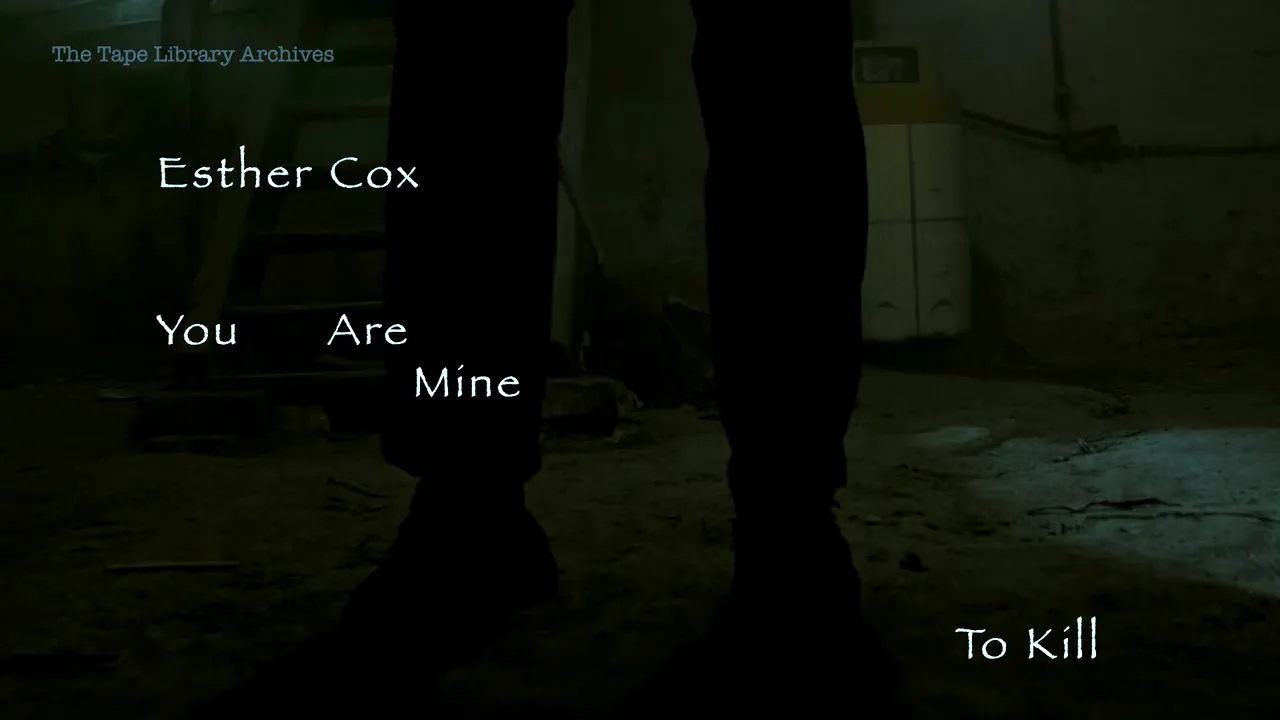
Plaster flew from the wall. More pounding followed. The disturbances continued for nearly two hours before Esther finally fell asleep.
When the doctor returned the next day, he found her doing chores as if nothing had happened. Yet she was clearly frightened, jumpy, and hyper-alert. Every small noise made her react.
Then, in the cellar, after Esther claimed someone had thrown wood at her, the doctor accompanied her downstairs. They found no one there. But as they turned to leave, potatoes came flying at them from nowhere.
At this point, even the doctor could no longer pretend there was nothing strange happening.
The “Electrical” Theory
This was the late 19th century, and the language people used to understand mysterious events was very different from what we might use now. Spiritualism was popular. So were theories that borrowed heavily from early scientific ideas and applied them rather loosely to the unexplained.
The doctor, and later a Reverend Clay, began entertaining the idea that Esther’s body was somehow generating a kind of electrical force. They did not believe the events were necessarily a hoax, but they were not ready to declare them ghostly either.
Esther herself described sensations like electricity running through her body. Sedatives were tried. Observation continued. At one point, pounding noises sounded as if someone were hammering the roof with a sledge. The doctor ran outside and searched the roofline in moonlight, but saw no one.
The sounds could reportedly be heard from 200 yards away.
As odd as that theory sounds now, it was an attempt to explain the phenomena without dismissing the witnesses outright. In some ways, it was an early effort to thread the needle between medicine, psychology, and the paranormal.
When the House Became a Public Spectacle
Once the noises began happening during the day, the case escaped the house entirely.
Princess Street was well traveled. People heard the sounds. Rumors spread quickly. Before long, newspapers were publishing sensational accounts of the strange events in Amherst. Crowds gathered outside the Teed home. Curious visitors packed inside hoping to witness the mystery for themselves.
Police were eventually needed to control the sheer number of people turning up.
And all the while, at the center of this spectacle, was Esther. An already traumatized young woman whose nights were becoming a nightmare.
Then she became seriously ill with diphtheria. During the period she was bedridden and later while staying with another sister, the disturbances temporarily ceased. The Teed house fell quiet.
But when Esther returned, so did the activity.
This pattern became one of the strongest arguments for those who believed the phenomena were somehow tied directly to her.
Fire Enters the Story
The case took a much darker turn when the disturbances began involving flames.
Esther told Jenny that a voice had warned the house would be set on fire. Daniel dismissed the idea, saying electricity would not start a blaze unless it came as lightning.
As he said that, a lit match fell near him.
Then another. And another.
The family rushed around stamping out matches that seemed to fall from above. This was one of the moments when those involved started to feel the phenomenon was not just random, but responsive. It could hear them. It could answer them.
From there, a rough communication system developed using knocks:
- One knock for no
- Two knocks for uncertainty
- Three knocks for yes
As more people visited, they began questioning the entity too. It seemed able to answer correctly about how many people were present, what coins people carried, even details hidden in pockets.
Then Daniel asked whether the house really would be burned.
The answer came back yes.
Minutes later, a dress was found on fire.
Three days after that, Olive discovered smoke rising from the cellar. A bucket of wood shavings had been deliberately ignited. Men from the street rushed in and helped put the fire out.

At that point, the affair stopped feeling like a strange local curiosity. If the Teed house burned fully, there was real concern that a larger disaster could follow in a dry, windy town.
The Ghost Gets a Name and a Personality
As the months passed, the disturbances seemed to become more defined, more personal, and more openly malicious.
Esther began hearing voices. She eventually claimed to see a male apparition standing in the room, glaring and laughing at her. According to her, he threatened to kill the family if she did not leave the house.
The entity increasingly seemed less like an abstract force and more like a persecutor.
At some stage, names became attached to the spirits. The most feared among them was Bob, later described as a grimy older shoemaker who pounded walls, threw dangerous objects, started fires, and wanted Esther dead so she could be “his forever.” Others were named too: Maggie, Mary Fisher, Peter Teed, Jane Nickell, and Eliza McNeil.
That naming matters, because it suggests the case evolved over time. It did not stay at the level of noises and moving furniture. It developed a cast of characters, motives, and relationships.
For believers, that makes it more convincing.
For skeptics, it makes it more suspicious.
Exile from Home
By January 1879, Daniel Teed felt he had little choice but to send Esther away for her own safety and perhaps for the safety of everyone else in the house. She moved into the home of a man named John White.
For a while, things improved. Esther’s nerves steadied. The disturbances quieted. People hoped the nightmare had passed.
Then belongings began going missing. The voices returned. Fires broke out again.
White, now frightened to leave Esther alone in his home, began bringing her with him to his saloon on Main Street. There, the disturbances followed.
Objects moved around the bar. The stove door opened on its own. Furniture shifted. And then came one of the more chilling episodes in the entire case.
White’s son Frederick was whittling wood with a pocketknife when the knife suddenly flew from his hands and lodged in Esther’s back. The wound was not fatal. The blade was cleaned and put back away.
Moments later, despite being closed and back in the boy’s pocket, it reportedly shot out again and struck Esther in the exact same place.

Several witnesses were said to have seen it. The knife was then locked away.
If true, this is one of the strongest examples in the case for those who argue Esther could not possibly have orchestrated everything herself.
Walter Hubble and the Failed Debunking
By spring of 1879, the Amherst case had spread far enough that it caught the attention of Walter Hubble, an actor touring through the region.
Hubble already had an interest in exposing fraudulent mediums. A close friend of his had, after the death of her mother, been exploited by people claiming they could communicate with the dead. Hubble took it upon himself to dismantle such claims when he could.
So when he read of the “Great Amherst Mystery,” he initially saw two possibilities.
- He could expose it as nonsense.
- He could make money from the story.
His original plan was remarkably cynical. He envisioned taking Esther on tour, presenting her to audiences, and then revealing how the fraud worked. Astonishingly, arrangements for such a tour were discussed before he had even met her.
But once Hubble entered the Teed home, his certainty began to collapse.
He heard the knocks. He witnessed the disturbances. He asked questions and received apparently intelligent responses. The unseen force could tell him the time, keep rhythm with a tune he whistled, and identify the date on a coin in his pocket.
He watched the family carefully for signs of trickery and claimed he saw none.
Esther agreed to travel with Hubble and John White for a lecture tour, but it quickly unraveled when they encountered hostility and even violence from crowds. White decided the tour was too dangerous and pulled the plug.
Hubble, however, remained fascinated. He stayed with the family over the summer, keeping notes that would eventually form the basis of the most famous book on the case, The Great Amherst Mystery.
The Summer of Daily Violence
According to Hubble, the disturbances during his stay were not occasional oddities. They were daily and relentless.
Objects flew through rooms. Fires started. Matches fell from ceilings. A toy trumpet seemed to appear from nowhere after he heard phantom trumpet sounds. His own umbrella reportedly sailed through the air, and a carving knife narrowly missed his head within minutes of his arrival.
Hubble also noticed patterns.
Most notably, the activity nearly ceased on Sundays and resumed on Mondays with force. Young George, a child in the house, allegedly saw the same apparitions Esther described and was even attacked, his clothing torn by something unseen.
By this stage, Esther was not simply dealing with noises. She was allegedly being physically assaulted at night. She and Jenny were pulled from bed. Their nightgowns were torn. Their bodies were left with scratches and cuts. Knives and shears were launched at Esther’s throat. Pins were found embedded in her skin in the morning. A fork once flew across a room and lodged in her forehead.
Some of these details are so extreme they test belief to its limits. But they are also central to why this became known as Canada’s most violent poltergeist case.

Hubble even carried out his own experiment. After a period of intense activity, he had Esther sit facing him and hold his hands. He later described feeling as if electricity were coursing through his arms the entire time. Esther said she felt normal. Hubble, however, was left so drained that he went to bed and slept for twelve solid hours.
It is exactly the kind of anecdote that sits on the border between belief and interpretation. Was he experiencing suggestion, genuine physical sensation, or something stranger?
The Family Breaks Apart
As the summer wore on, the Teed home suffered more and more damage. Fires became frequent. Furniture was ruined. Walls were scorched. Family members were exhausted and frightened. William Cox and John Teed finally moved out altogether.
The landlord eventually gave Daniel Teed an ultimatum. Either Esther left, or the whole family would be turned out.
So Esther was sent again to stay with an elderly couple at the Van Amburg farm.
After she left, the Teed house fell silent. No knocks. No movement. Nothing.
At first it seemed the farm might offer the same relief it had before. For a few weeks, all was calm. Esther herself believed perhaps distance from Amherst had finally ended the persecution.
It had not.
A Fiery End and a Prison Sentence
When Hubble later checked back in with the family, he learned the story had ended in yet another disaster.
The barn at the farm where Esther was staying burned to the ground.
Esther blamed Bob, the malignant entity she believed had followed her all along. Authorities blamed Esther.
She was arrested and sentenced to four months in jail, the judge apparently believing she had been responsible for the fires from the beginning.
But Amherst itself pushed back. Many locals believed Esther. Public outrage became strong enough that she was released after just one month.
This seems to have been the breaking point.
Esther eventually moved away, later starting a family elsewhere. According to a letter from her sister Jenny, the ghosts did not follow her. Whether that means the phenomena truly ceased, or simply ceased being publicly discussed, is impossible to know.
The Missing Piece: Bob McNeil and the Trauma at the Center of It All
For much of the case, the most important context remains hidden until later retellings bring it into focus.
The night Esther came home drenched and distraught after her outing with Bob McNeil was not simply the end of a bad date.
According to Daniel Teed’s later account, McNeil had driven Esther out toward a marshy, isolated area. There, he stopped the carriage, produced a revolver, pointed it at her, and demanded she get out.
When she refused, he threatened to kill her.
Rain began pouring down. Esther pleaded with him to stop and take her home. He raised the gun and seemed prepared to fire. Then another wagon was heard approaching. McNeil put the weapon away, jumped back into the buggy, and drove her home at speed, leaving her terrified and soaked.

If true, this changes the emotional center of the whole story.
Suddenly the doctor’s early theory about severe shock makes much more sense. Esther’s withdrawal, her sobbing at night, her jumpiness, her physical distress, and the timing of the disturbances all align with the aftermath of trauma.
It also makes one detail almost impossible to ignore: the main spirit tormenting Esther was called Bob.
That may mean nothing. It may mean everything.
Was Esther Cox Haunted, Traumatized, or Both?
This is the question that has kept the Great Amherst Mystery alive for nearly a century and a half.
There are, broadly, three ways to look at it.
1. A conventional fraud or exaggerated hoax
This is the explanation skeptics often reach for first. Esther, knowingly or not, could have staged at least some phenomena. Others may have joined in, or later accounts may have dramatically embellished what really happened.
There are reasons for caution:
- Newspaper coverage of the time was sensational.
- Walter Hubble had financial motives and later wrote the most famous account.
- Some family members reportedly said Hubble made events more fantastical than they really were.
That does not mean nothing happened. It means the version of events that survived may be inflated in places.
2. A trauma response expressed through paranormal belief
This is, to me, one of the most compelling grounded readings of the case.
Esther was an 18-year-old woman in a small 19th-century town, living in a world with little understanding of trauma, dissociation, or psychological crisis. If she suffered an attempted assault at gunpoint, and possibly more than that, the distress that followed could easily have found expression through the language available to her and her community: spirits, forces, possession, electrical influence.
But this theory hits a wall too. It struggles with the number of witnesses and with incidents where Esther does not appear to have had direct control.
3. A poltergeist case linked to Esther’s emotional state
This is where the case becomes especially interesting.
Many classic poltergeist cases share the same patterns found here:
- Activity centered on one distressed person
- Object movements and loud knocks
- Fires and physical disturbances
- Events that follow the person from place to place
- Periods where the activity abruptly stops, then returns
In paranormal research, one non-spirit explanation for these cases is Recurrent Spontaneous Psychokinesis, or RSPK. Popularized much later by researcher William G. Roll, this theory proposes that poltergeist events may be unconsciously produced by a living person under intense emotional stress.
Instead of a dead person haunting the house, the force originates in the psyche of the living. Suppressed emotions externalize as physical effects: knocks, thrown objects, fires, electrical oddities.
Whether one accepts that theory or not, Esther’s case fits its pattern remarkably well.
The disturbances followed her.
They intensified around periods of distress.
They seemed to quiet when her circumstances changed.
And they were repeatedly interpreted through the beliefs of those around her.
The Problem With Sources
Any serious look at Esther Cox has to acknowledge a frustrating reality: the case is difficult to pin down because the sources are messy.
The main surviving categories of evidence are:
- Newspaper reports, often dramatic and unreliable
- Psychical research commentary, some of which included errors
- Walter Hubble’s book, which is indispensable but far from neutral
Hubble is especially tricky. On one hand, he came in skeptical and claimed to have been persuaded by experience. On the other, he was explicit that he initially saw money in the story. Once the lecture tour failed, writing a gripping paranormal book was another obvious route.
That does not mean he lied wholesale. It does mean his testimony must be handled carefully.
And still, even after all that caution, one fact remains stubbornly unsettling: many people in Amherst seem to have genuinely believed Esther was suffering through something real.
Why the Esther Cox Case Still Endures
The Great Amherst Mystery has lasted because it sits at a crossroads.
It is a ghost story.
It is a poltergeist case.
It is a study in trauma.
It is a cautionary tale about publicity, exploitation, and the hunger to turn suffering into spectacle.
It also feels eerily modern. So many later cases echo it. The central distressed young person. The intelligent knocks. The escalating violence. The way theories bend around the phenomena instead of fully containing them. The way communities divide into believers and skeptics while the person at the center deteriorates.
Whether Esther was haunted by spirits, by the unconscious force of her own pain, or by a culture unequipped to help her, the result was devastating.
Her family home was damaged. Her reputation was absorbed into a public mystery. She was put on display. She was later imprisoned. And at the root of it all sits a young woman who came home one night soaked by rain and too distressed to explain what had happened to her.
That is the part of this story I find hardest to shake.
Because no matter which explanation you favor, the horror is real enough.
FAQ
Who was Esther Cox?
Esther Cox was a young woman from Amherst, Nova Scotia, who became the central figure in the 1878 to 1879 haunting known as the Great Amherst Mystery. She was said to be plagued by violent poltergeist activity including knocks, flying objects, mysterious fires, and physical attacks.
What is the Great Amherst Mystery?
The Great Amherst Mystery is the name given to the alleged haunting surrounding Esther Cox in Amherst, Nova Scotia. The case became famous because multiple witnesses, including a doctor and investigator Walter Hubble, claimed to observe unexplained events over an extended period.
Was Esther Cox’s haunting ever explained?
No definitive explanation has ever been accepted. Some believe the case was paranormal. Others think it was rooted in trauma after Esther’s terrifying encounter with Bob McNeil. Another theory links the events to a poltergeist-like process known as recurrent spontaneous psychokinesis, or RSPK.
What did Walter Hubble believe?
Walter Hubble reportedly arrived in Amherst hoping to debunk the case. After spending time with Esther and the Teed family, he became convinced that something extraordinary was happening. He later published The Great Amherst Mystery, which remains the best-known account of the case.
Why do some people connect the case to trauma?
The disturbances began shortly after Esther allegedly experienced a violent threat from her boyfriend Bob McNeil, who reportedly pointed a revolver at her and threatened to kill her. That event may have left her severely traumatized, which could explain at least part of what followed.
Did Esther Cox go to prison?
Yes. After a barn fire at the farm where she was staying, Esther was arrested and sentenced to four months in jail. However, public support in Amherst was strong enough that she was released after about one month.
Did the haunting ever stop?
Later reports suggested that Esther eventually moved away, started a family, and no longer experienced the disturbances. Her sister Jenny later wrote that the ghosts had not followed her, though the full truth of that is impossible to verify.
Final Thoughts
The haunting of Esther Cox remains frightening not simply because of what was seen or heard, but because of what it reveals about uncertainty.
A young woman suffers a terrible shock. Strange events erupt around her. Doctors, clergy, family, and townspeople each try to explain it through whatever framework they have available. Some see spirits. Some see electricity. Some see fraud. Some see the outward violence of inward pain.
And somewhere inside that confusion, Esther herself is almost lost.
Maybe this was one of history’s most violent poltergeist cases. Maybe it was a tragedy refracted through 19th-century beliefs until it became folklore. Maybe it was both.
Whatever happened in Amherst, it left enough of a mark that the story still unsettles people well over a century later.
And perhaps that is because the case never resolves cleanly. It refuses to become just a ghost story.
It remains, instead, a haunting in every sense of the word.