
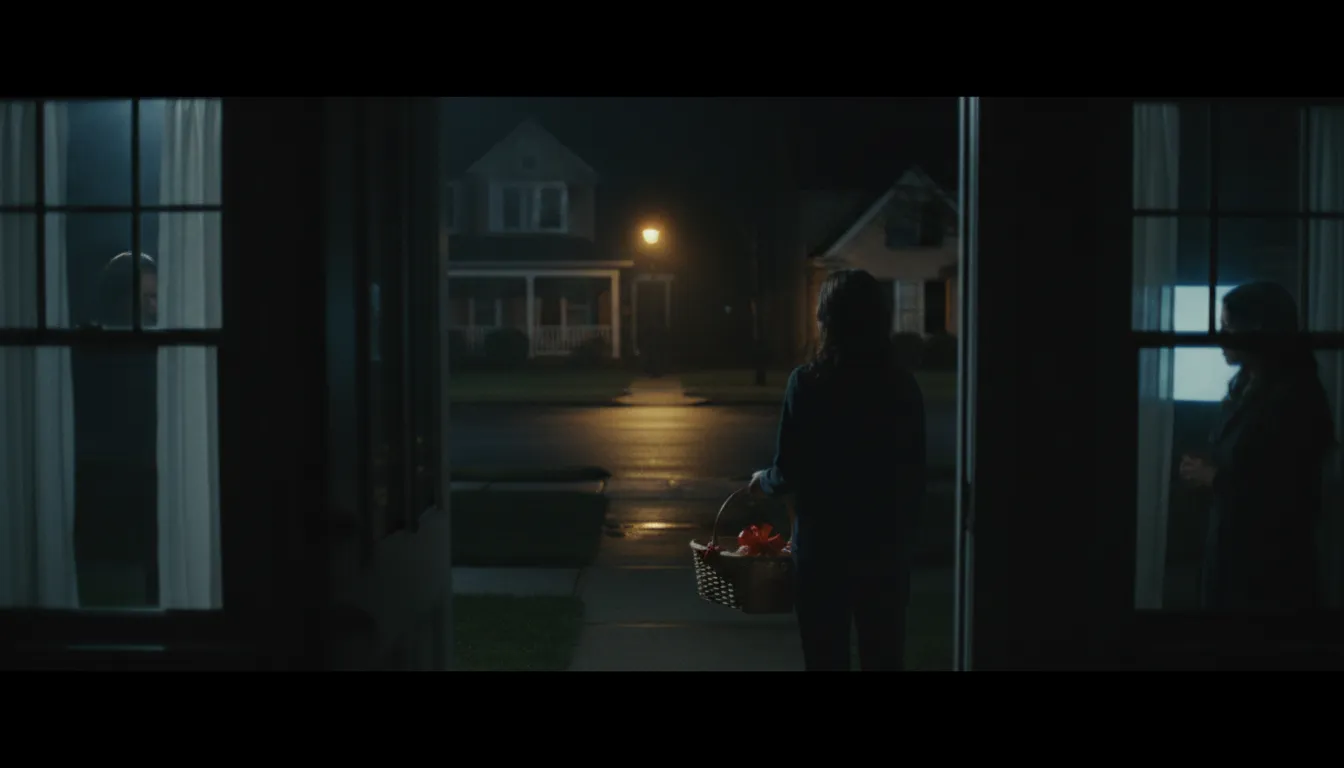
Most bad neighbor stories start small.
A little too much noise. A weird comment in the hallway. A guy who stares too long. A family that seems off in a way you can’t quite explain. Usually, people try to brush it off. Nobody wants to be dramatic. Nobody wants to believe the person living twenty feet away could turn into the scariest part of coming home.
But sometimes that gut feeling is right.
These stories all circle the same ugly truth: danger does not always arrive looking dramatic. Sometimes it shows up carrying a welcome basket into a bad apartment situation. Sometimes it offers kids ice cream. Sometimes it lives in the house across the street, waves from the porch, and blends into the neighborhood until one day it absolutely doesn’t.
What makes creepy neighbor stories stick isn’t just the shock factor. It’s the proximity. These aren’t strangers encountered once at a gas station or on a dark road. These are the people who know your routines, your comings and goings, your car, your windows, your schedule. They know when you’re alone. They know what time you get home. And when they go bad, the place that’s supposed to feel safest starts feeling like a trap.
Here are seven disturbing true stories about creepy neighbors, each unsettling in its own way, and all of them reminders that sometimes the most frightening thing is how ordinary it all looked at first.
Table of Contents
- The neighbor across the hall who wouldn’t stop watching
- The family in the trailer and the child with the bow
- The nice man across the street who bought the kids ice cream
- The adopted children next door and the murder across the street
- The armed robber down the street who came back
- The house where the phone kept coming off the hook
- The man upstairs who turned a basement apartment into a nightmare
- What these creepy neighbor stories have in common
- Why creepy neighbors leave such a lasting mark
- Red flags people often try to rationalize
- The uneasy lesson at the center of all seven stories
- FAQ
The neighbor across the hall who wouldn’t stop watching
Sarah was 24, living in an apartment in the suburbs of Atlanta with her roommate, Emma. They were careful people. Their place had a Ring peephole camera and a digital lock. They paid attention. They did the things people are told to do to stay safe.
Then a new neighbor moved in across the hall.
His name was David, and at first he just seemed socially awkward. He moved in with stacks of anime figurines, Star Wars posters, lightsabers, the whole nerd shrine starter pack. Sarah and Emma were nerdy too, so they did what good neighbors do. They made a welcome basket with homemade Red Dead Redemption 2 cookies, candles, and some seasonal extras, knocked on his door, and introduced themselves.
He barely looked at them.
That could have been the end of it. Some people are shy. Some people are strange without being dangerous. For a little while, they figured quiet and antisocial was better than loud and obnoxious.
Then he started appearing in the hallway every time one of them stepped out, as if he’d been waiting by the door for the sound of movement. He asked for sugar, toilet paper, tools, random household items. He even asked them to sit in his apartment while he ran errands, which is the kind of request so bizarre it almost short-circuits your brain for a second.
They kept saying no. He kept coming back.
The real shift happened late one Saturday night. Sarah and Emma came home around 3:00 a.m. after being out near Truist Park, a little drunk, still in control of themselves, only to find David sitting cross-legged on the landing between their apartment and his. He stood up and asked where they’d been. When they told him, he said he’d been worried sick and that they needed to tell him in advance if they were going out for the night.
It was so absurd Emma nearly laughed.
But the Ring footage the next morning stripped away any illusion that this was merely awkward. After they’d gone inside, David sat back down in the hall outside their door and stayed there for hours, staring, rocking, lingering until nearly 6:00 a.m.
Police were no help. Since he hadn’t directly threatened them yet and was in a shared hallway, there wasn’t much they were willing to do. The apartment complex was notified, and for a few days he backed off.
Then things got much worse.
He started hanging around their door constantly. He watched them. He paced. He muttered under his breath. If others were nearby, he kept his comments sounding harmless. Compliments. Invitations. Casual little lines that could be shrugged off by anyone not standing in their shoes.
But when no one was around, the mask dropped. He threatened to kill them in their sleep if they didn’t come over to his apartment. He started leaving handwritten notes on their door and their cars, including obsessive love letters and graphic fantasies. He installed his own Ring camera aimed toward their entrance, apparently so he could monitor when they left and returned.
One note read, “Missed you today.” Another said, “You’re so beautiful when you sleep.”
That last one was the kind of sentence that poisons a home instantly. Their bedroom windows faced the back of the building on the third floor, and they had assumed no one could see in. Then one night Sarah woke at 2:00 a.m. to scratching outside the window and saw what looked like a shadow moving near the streetlight below.
Again, police offered very little. The nice-sounding notes weren’t enough. The spoken threats were hard to prove. A restraining order was suggested, as though legal paperwork materializes overnight and instantly solves obsession.
In the end, they broke their lease and left. It cost them money, but they got peace back, and sometimes that is the only win available.
The disturbing part of this story isn’t only David’s behavior. It’s how little help people often receive until a stalker escalates past the point where everyone can no longer pretend it’s ambiguous.
The family in the trailer and the child with the bow
Another story starts in childhood, with a trailer near the storyteller’s home. Their grandfather owned it and rented it to a new family with two children, Jessica and Jack, roughly the same ages as the storyteller and their brother.
At first, there was reason to be excited. New kids nearby usually meant bikes, dirt paths, and summer afternoons with somebody new to race and laugh with.
Jessica was friendly and normal enough. Jack was something else entirely.
Their father was deeply unsettling. He collected old furniture and trash, piled it in the yard, and regularly burned it, leaving behind scorched junk and a constant smoke smell. Inside the trailer, things were grimy and neglected. On one visit, the storyteller saw the father shirtless in a stained chair with a beer in his hand and eyes so cold they turned the whole room wrong in an instant.
Outside, the kids would ride bikes together, but Jack’s behavior steadily crossed lines. He showed up half dressed, covered in snot, peed in the family flower bed, yanked on bike tassels hard enough to nearly cause a crash, and generally moved through the world with the kind of chaos that made adults uneasy and children nervous.
Then came the bow and arrow.
Jack brought out his father’s hunting bow, not a toy, and pulled an arrow back while aiming directly at the storyteller’s little brother’s head. He laughed while doing it. The arrow was real. The threat was real. The brother froze. The storyteller screamed. Their mother came running outside and immediately banned any further contact.
After that, Jessica and Jack kept knocking on the door, asking why they couldn’t come out to play. The family stayed silent inside and waited for the knocking to stop.
Years later, what lingered wasn’t just fear. It was pity too.
Jessica had seemed kind. Jack had seemed dangerous. But both children were clearly living in dysfunction and neglect, under parents who did not protect them or teach them how to exist safely in the world. One memory stayed especially haunting: waking one night to a sound outside the window and seeing what looked like Jack’s small frame standing near the trees, staring at the house before disappearing.
Maybe it was real. Maybe not. Either way, the feeling remained.
This one lands differently because it’s not just a creepy neighbor story. It’s a story about how neglected children can become frightening long before they are old enough to understand what they’re turning into.
The nice man across the street who bought the kids ice cream
Some stories are terrifying because nothing obvious happened at the time. The fear comes years later, once the truth catches up.
Growing up in a small town in Illinois, one storyteller and their younger sister used to play outside constantly. Across the street lived an older man named Mr. Rubelecki, or something close to that. He had gray hair, thick glasses, and seemed unremarkable. Quiet. Neighborly. Safe.
He began offering to take the kids for ice cream every so often, giving their mother a little break. The shop was only a few blocks away, and the outing became familiar. He would walk them there, buy them cones, sit nearby while they ate, and walk them home.
Nothing seemed strange about it to the children.
Then one day the family moved suddenly. No clear explanation. They left the suburban house for an apartment in a larger town, and only years later, when the storyteller was in high school, did their mother finally explain why.
Mr. Rubelecki was a registered sex offender.
This was long before online registries and neighborhood alerts were easily accessible. Their mother had no idea at first. Someone from town came by to warn her after people started realizing he was taking the children out regularly. He had apparently been careful too. He’d often hand the kids money and let them run ahead for ice cream while he popped into the general store across the street, making it less obvious that he was directly accompanying them.
Then came the most chilling detail of all: according to the warning they received, townspeople were allegedly discussing killing him and making it look like an accident.
The mother moved the family fast, asked subtle questions afterward to make sure nothing had happened, and kept the truth from the children until they were older.
As adults, both siblings remained nearly certain that nothing physical ever happened to them. But certainty doesn’t erase the aftertaste. It changes the shape of old memories. It stains them. Suddenly the red-and-white awning of the ice cream shop, the sticky sidewalk, the ordinary bench outside, all of it gets recast under a much darker light.
This is one of the hardest kinds of neighbor horror to process because the threat was invisible at the time. Innocent memories survive, but they never feel fully innocent again.
The adopted children next door and the murder across the street
In another neighborhood, a family moved in next door and seemed, at least on paper, almost saintly. They had adopted two children, and in a church-minded community that carried a certain halo effect right away.
It didn’t last.
Very early on, the new neighbor came over and apologized in advance for the noise her children supposedly made. She said they screamed and cried often and hoped they weren’t bothering anyone. But no one had heard screaming. The children, when seen outside, were quiet.
That odd little mismatch sat there until one Sunday when the storyteller’s father, working in the garage, heard screaming from next door and ran over. The mother was in hysterics, saying she had found the younger child, a boy, unresponsive on the ground. Police and an ambulance came. At first, it sounded like an awful accident. The boy had supposedly fallen and struck his head on the concrete patio.
Then more police arrived. Unmarked cars. Tape. Questions.
The story changed.
Rumors spread that the child had not fallen at all. The mother had beaten him, cracked his skull, panicked, and dragged him outside to stage the scene. The autopsy reportedly showed bruises and injuries consistent with ongoing abuse.
Then another layer of horror came out. The couple had allegedly been driven out of a previous neighborhood after repeated reports to child services. And even worse, the two children they were said to have adopted were not legally adopted at all. They had been purchased through some shady arrangement. The exact origin of the children remained unclear, but the implication was unmistakably sinister.
The wife received life in prison. The husband was also charged with related offenses. The house sat empty for a while after that, dark and overgrown, before new occupants moved in and the street tried to become ordinary again.
But ordinary doesn’t really come back after a child is murdered fifty feet from your house.
This story is a reminder that abusive households can look painfully normal from the outside. Quiet children are often interpreted as well-behaved. In reality, they may be frightened, shut down, or living under conditions no one can easily see until something catastrophic happens.
The armed robber down the street who came back
Sometimes a creepy neighbor doesn’t just create a frightening memory. They come back and reopen it.
At eight years old, one storyteller saw their father robbed at gunpoint by a neighbor who lived three houses down. It happened in the early evening while the father was unloading groceries. A loud bang got the child’s attention. Looking out the window, they saw a man holding a gun to their father’s chest, stealing his wallet and car keys before running off into the woods behind the house.
Police caught him that same night. He’d been drinking and wanted money for more alcohol. He went to prison for armed robbery.
That should have been the end of it.
But when the storyteller was thirteen, the neighbor was released and moved back in. The sight of his rusted pickup in the driveway was enough to bring the entire trauma roaring back. Their father tried to be practical about it. He had served his time. He had a right to return. People can change.
That may all be true in the abstract. Trauma is not abstract.
The child, now a teenager, couldn’t sleep. Every creak in the house sounded dangerous. The locks got checked repeatedly. Nightmares began, all centered on the same basic fear: the neighbor returning with the gun, this time finishing what he had started.
Those fears lasted for years while the man remained in the neighborhood. Only when a For Sale sign finally appeared and he moved away did the pressure begin to ease.
There’s something brutally honest about this story. Not every threat needs to become active again to keep hurting people. Sometimes the return of a person is enough. The body remembers what the mind wishes it could file away and forget.
The house where the phone kept coming off the hook
Not every neighbor story is straightforward. Some leave behind enough uncertainty to make them linger longer.
One storyteller spent stretches of childhood living with their grandmother while their parents traveled for film work. The grandmother’s house was small, old, and ordinary, with one particularly annoying mystery. The phone in her bedroom kept ending up off the hook whenever she returned from work.
At first she blamed the child. It made some sense. Who else could it be?
But the child insisted it wasn’t them, and eventually something happened that made the whole thing impossible to explain away as forgetfulness.
One afternoon, arriving home from school, the child heard two distinct footsteps coming from the grandmother’s room upstairs. Assuming she had gotten home early, they walked up the stairs and found no one there. The room looked normal except for the phone. The receiver wasn’t just off the hook. It was stretched unnaturally far across the floor, positioned in a way that looked deliberate.
Then the phone rang.
It was the grandmother. She said she had called a few minutes earlier and someone had answered, then stayed silent on the line. She had assumed it was her grandchild. It wasn’t.
Police came, searched the house, found nothing, and had no explanation. The windows were too small and awkward for easy entry. Nothing appeared stolen. No intruder was found. Later, the grandmother and child set up a tape recorder in the room and left the house for a while. On playback, they heard footsteps and then the soft click of the phone being lifted.
Again, no explanation.
Eventually they fled to a relative’s home, and the grandmother sold the house without returning to live there. A neighbor later entered to water plants and found the phone off the hook again, stretched out on the floor just as before.
The storyteller doesn’t believe in ghosts, which somehow makes the whole thing more unnerving, not less. If it wasn’t supernatural, then the alternative is that someone had access to the house and was engaging in a sustained, intimate campaign of trespass and psychological torment.
And honestly, that possibility may be creepier than any haunting.
The man upstairs who turned a basement apartment into a nightmare
The final story brings things back to the kind of neighbor horror that can grow through daily friction until fear becomes part of your routine.
The storyteller lived in a basement apartment under a woman, her children, and her boyfriend, Ryan. While the woman was there, Ryan was already an angry drunk, but she kept some kind of lid on him. Once she left and took the kids, the dynamic changed completely. It was just the tenant downstairs and Ryan upstairs.
He was hostile from the beginning. A minor mistake, like putting an unbroken-down Amazon box in his recycling bin, triggered a vicious text full of abuse. The tenant eventually blocked his number and told him never to speak to her again, but that did nothing to cool the situation.
Parking disputes made things worse. Coming home late from night shifts meant sometimes using the driveway in ways Ryan didn’t like. One night he woke her after midnight by screaming her name outside the door, calling her vile names and ranting while she moved her car. He even raised his hand as if he might hit her.
She started planning to move.
Then came an argument with Ryan’s nineteen-year-old daughter, whose room was directly above the tenant’s. A TV volume dispute escalated into shouting, and the tenant snapped back by comparing the daughter to her father. The next morning Ryan pounded on the basement door hard enough to sound like he might break it down, screaming threats and abuse.
Police were called. They treated it as a civil matter.
After that, the fear shifted from verbal harassment to something physically ominous. One night, around 2:00 a.m., with the basement window cracked open, the tenant heard a scraping sound against the glass. Looking out, she caught a brief metallic glint, something like a blade reflecting moonlight. She slammed the window shut and locked it. The next morning there were thin jagged scratches on the glass.
The nights got worse. Heavy footsteps paced directly above her bed. At one point she heard breathing outside the window. Then she found a note pushed under her door containing a crude drawing of a stick figure with a knife in its chest.
Again, police didn’t do much.
So she got out. She left by the end of August, moved into a quiet second-floor unit with no shared walls, and for the first time in years slept with a window open and heard nothing but normal distant traffic.
That silence must have felt like luxury.
What these creepy neighbor stories have in common
Even though these stories are all different, they share a few patterns that show up again and again in true scary stories about neighbors.
1. The danger starts small
Almost none of these situations began with obvious violence. They started with awkwardness, oddness, inappropriate familiarity, vague discomfort, or little bursts of hostility that might be dismissed one by one. Looking back, the escalation seems clear. Living through it, not always.
2. Proximity makes everything worse
A hostile neighbor is uniquely stressful because there’s no clean escape at the end of the day. Home is where they are too. The hallway, the parking spot, the upstairs floorboards, the yard, the shared wall, the window facing yours. They’re woven into your everyday life.
3. Authorities often respond late
This is one of the most frustrating threads running through several of these stories. Unless there is visible injury, clear proof, or a legal threshold already crossed, help can be slow, limited, or almost useless. Threats that are obvious in context may be treated as insufficient in isolation.
4. Children often sense danger before they can name it
The stories involving childhood are especially striking. A weird father in a trailer. A quiet old man offering treats. Kids next door who seem “too quiet.” Children usually lack the vocabulary to explain what feels wrong, but they still carry the fear.
5. Leaving is sometimes the only real solution
There’s a harsh reality here. People want justice, intervention, boundaries, and official protection. Sometimes all of that fails. Several of these stories end not with resolution, but with relocation. Expensive, unfair, imperfect relocation.
Why creepy neighbors leave such a lasting mark
A bad interaction with a stranger can ruin a night. A frightening neighbor can alter your nervous system.
That sounds dramatic, but it’s true. The stories here are full of sleeplessness, hypervigilance, route changes, second-guessing, and memories that stayed vivid for years. A hallway becomes contaminated. A phone ringing becomes sinister. An ice cream shop becomes haunted by context. A returning pickup truck becomes enough to trigger panic.
What lingers is not only what happened, but what could have happened.
That uncertainty is brutal. Maybe the old man never intended to touch the children. Maybe he did and never got the chance. Maybe the figure outside the window really was the troubled boy from childhood. Maybe it was a dream. Maybe the phone in the grandmother’s house was being moved by a trespassing neighbor who came and went without leaving a trace.
Uncertainty keeps these stories alive.
Red flags people often try to rationalize
If these stories suggest anything useful beyond their shock value, it’s that people are often trained to minimize early warning signs. Some common ones showed up repeatedly:
- Unwanted monitoring, such as repeatedly appearing the moment someone leaves home
- Boundary testing, including bizarre requests or overfamiliar demands
- Harassment disguised as harmlessness, especially when behavior changes depending on who is around
- Explosive reactions to small conflicts, like trash, parking, or noise
- Fixation on routines, including tracking when someone leaves or returns
- Children who seem unusually shut down or fearful in a home that otherwise appears normal
- Repeated unexplained intrusions or disturbances that don’t fit the physical facts
None of these guarantee a person is dangerous. But stacked together, they matter.
The uneasy lesson at the center of all seven stories
The most unsettling lesson here is probably the simplest one: familiarity is not the same thing as safety.
We instinctively lower our guard around people who live nearby. They become part of the scenery. The guy with the truck. The woman with the kids. The old man on the porch. The nerd across the hall. The drunk upstairs. They are close, repeated, ordinary. And because of that, we often explain away what we would immediately recognize as alarming if it came from a stranger.
That does not mean living in suspicion of everyone around you. It does mean respecting your own discomfort when someone keeps crossing lines.
Because by the time a creepy neighbor becomes an obviously dangerous one, the situation may already be far past uncomfortable.
FAQ
Why are creepy neighbor stories often more disturbing than random stranger stories?
Because neighbors have access to your routines and physical space. They know when you leave, when you return, where you park, what window is yours, and when you’re alone. That constant proximity makes even small acts feel much more threatening.
What was the scariest pattern across these seven true stories?
The pattern of escalation. In several cases, behavior started out merely odd or irritating and then slowly turned threatening. That progression made it harder for the people involved to know exactly when a line had been crossed until things were already very serious.
Did the police help in most of these situations?
Not really. In multiple stories, police responses were limited because the behavior had not yet reached a threshold they could act on decisively, or because proof was difficult to document. That gap between fear and enforceable action is part of what made several situations so dangerous.
Why do these stories stay with people for so long?
They attach fear to home. Once a place that is supposed to feel safe becomes associated with stalking, threats, abuse, or unexplained intrusion, the mind keeps replaying it. Even after the person is gone, the memory often remains tied to doors, windows, hallways, and nighttime sounds.
Were all of these neighbors openly dangerous from the beginning?
No. That’s part of what makes the stories so unsettling. Some neighbors seemed awkward, quiet, friendly, or even generous at first. Others looked normal enough from the outside. The danger was either hidden or revealed only gradually.
What common warning signs appeared in these stories?
Common signs included obsessive attention, threats delivered in private, explosive anger over small issues, invasive note leaving, suspicious interest in children, and homes where children appeared neglected or unusually silent. Repeated boundary violations were a major theme throughout.
Some neighbors become friends. Some remain background noise in your life forever. And some turn into stories people carry for decades, not because they were dramatic in a cinematic way, but because they got too close to the places and routines that make up ordinary life.
That’s what makes these seven stories so unsettling.
They didn’t happen in abandoned buildings or on lonely highways. They happened in apartment hallways, suburban streets, trailer yards, basements, and houses across the road. Familiar places. Everyday places.
Which, unfortunately, is exactly why they’re so hard to forget.